
A Chinese Drama Waited Ten Years. AI Got There First.
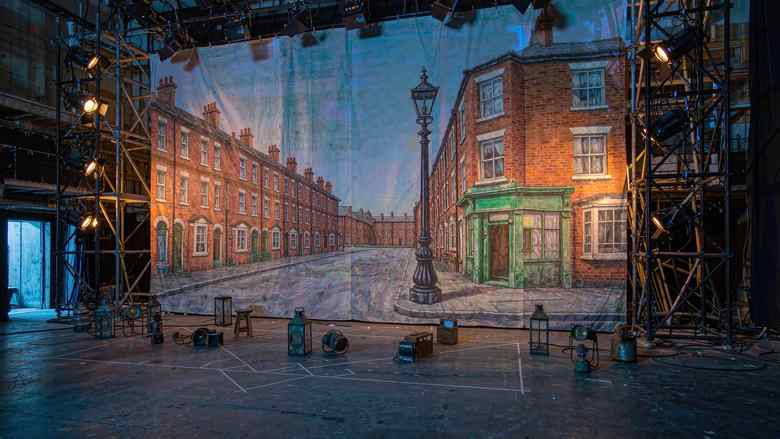
A television drama that has been in development for ten years started shooting in China this week. Not because a streamer finally said yes, and not because a star signed on. Because the scenes it needed became affordable.
The project is Chongqing, and the person who told the story is Hou Hongliang, chairman of Daylight Entertainment and head of the China Television Drama Production Industry Association. Speaking at a government-backed content conference in Beijing on November 4, he described a script that had existed since roughly 2016 and could not be produced: it required extensive British locations, the interiors of a warship, and naval combat footage.
"Some stories work on the page," he said, "but by the time you get to production, the sets, the cost, the conditions force you to shrink them, simplify them, or give them up." With AI, virtual production and live-action photography combined, the project finally cleared the bar. Cameras rolled on November 7.
What actually changed
This is where most English-language coverage of Chinese AI video gets it wrong. The story is not that a model improved. It is that a class of production became feasible.
Three specific things used to kill a project like this. British locations meant a foreign shoot — permits, crew, travel, insurance, and a currency exposure that a Chinese TV budget cannot absorb. Warship interiors meant either finding a museum ship or building a set, and a set for a cruiser's interior is a five-storey construction project. Naval combat meant water, models, or VFX that cost more per minute than the actors.
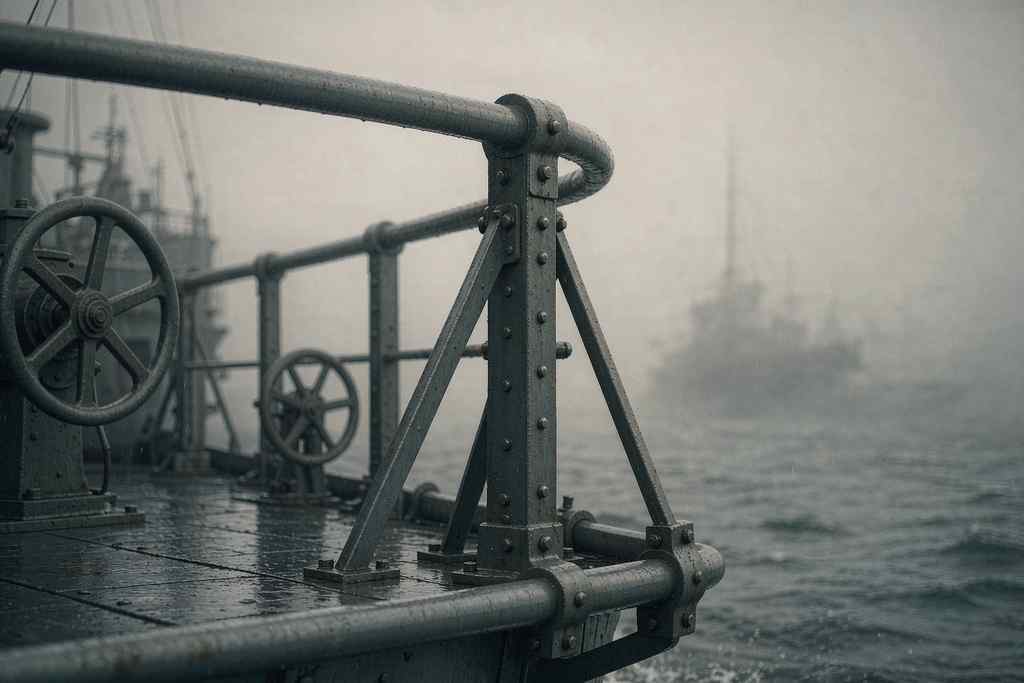
Virtual production solves the first two by putting the location on a wall. AI-assisted generation and post solve the third by making a shot cost less than a shoot. Neither is a replacement for craft. Both are a replacement for a line item that used to say "impossible."
The industry's own timeline, in its own words
The more useful data point from the same conference came from Xian Siyuan, a research vice president at Douyin's parent group. He dated the shift precisely: Sora validated the DiT route for direct video generation in 2024; Seedance 2.0 landed in February 2026 and changed what was possible; Seedance 2.5 arrived in July. The framing he used was not "better pictures." It was that video models moved from "can only generate images" to "can be put into production."
That distinction is worth taking seriously, because it is the same one that separates a demo from a workflow. A model that generates a beautiful eight-second shot is a toy if the shot cannot be matched to the next one. A model that holds a character, a lens, and a colour across a sequence is a tool, even if any individual frame is less impressive.
And the consensus position at the conference, repeated by several speakers, was carefully calibrated: AI lowered the barrier to premium production without lowering the standard for what premium means. That is the sentence everyone in the room agreed on, which usually means it is the sentence that costs the least to say.
The part nobody demos
Here is what interests me as an editor. The savings in a project like this do not show up where the demos are.
Demos show a generated shot. Savings show up in development: the ability to test whether a sequence works before committing a crew, a location, and eight weeks. They show up in coverage — the extra angle you would not have paid for. They show up in pickups, when an actor's schedule collapses and you need a bridge shot that was never planned.
In other words, AI's first real contribution to drama is not visual. It is a reduction in the cost of being wrong, and being wrong early is how good films get made. Every director I know would trade a marginal improvement in image quality for two more weeks of previsualisation.
There is a counter-argument, and it is strong: previsualisation that looks finished invites committees to approve things that have not been thought through. When a previz shot is indistinguishable from a final shot, the argument about whether a scene works becomes an argument about a rendering, and the people with the least visual judgement suddenly have the most confident opinions.
Why this is a Chinese story specifically
Two structural reasons.
First, the cost structure. Chinese drama production runs on tight per-episode budgets and enormous volume. A tool that reduces the marginal cost of a complex shot does not shave a luxury; it unlocks genres — period naval drama, science fiction, anything requiring a location that doesn't exist. The same economics would apply anywhere, but the volume makes it visible faster here.
Second, the industrial policy. A conference hosted by the film and television regulator is where you announce that a flagship project is viable. That is a signal to the rest of the industry about what will be commissioned, and it is a more reliable indicator of what gets made than any model leaderboard.
Meanwhile the actual production stack is Chinese: Seedance for generation, domestic virtual production stages, and a workflow built by people who grew up on tight schedules. The tooling question and the industrial question are the same question here.
The ship itself is worth a footnote for anyone who does not know the history. Chongqing was a cruiser built in Britain, handed over in the late 1940s, and famous in China for defecting to the communist side in 1949 — which is exactly why a faithful adaptation needs British shipyards, British streets, and the interior of a warship that no longer exists in sailable condition. The story is not expensive because of spectacle. It is expensive because its evidence is gone.
What to watch for
Whether Chongqing is good is unknowable, and mostly irrelevant to the trend. What matters is whether the next ten greenlit projects cite the same reason.
Watch three things over the next year. Do we see a wave of period and maritime dramas that would have been unproducible — the "unlocked genre" test? Do production budgets per episode fall, or do they stay flat while episode counts rise — the "same money, more shots" test? And do the crews grow or shrink? Virtual production changes the shape of a crew more than its size: fewer location scouts, more stage technicians.
Ten years is a long time to wait for a story. If the only thing that changed is that a wall can now be a British street and a cruiser's interior, that is already a large change — not because it makes better television, but because it makes a particular television possible. The interesting question about AI in film was never whether it can generate a shot. It was which stories stop being too expensive to exist.
Related articles
AMD Got 19 Percent for Being the Other Option
Money did not leave AI. It left the one name with a governance problem and went to the two without one.
The $99 Billion Loop Nvidia Built Around Its Own Customers
Selling shovels is a good business. Lending money to the people buying shovels is a different one.
The 74 Percent Gross Margin Has a Shelf Life
Three forces arrive in the same four quarters, and each one costs about $3 billion per point.
175,000 Signatures Will Not Put Him Back. Here Is What Would.
The longer the campaign takes to win, the weaker its case becomes. That is the trap built into it.