
A 5B Model Finally Writes Chinese Posters Correctly. It Still Won't Edit Them.
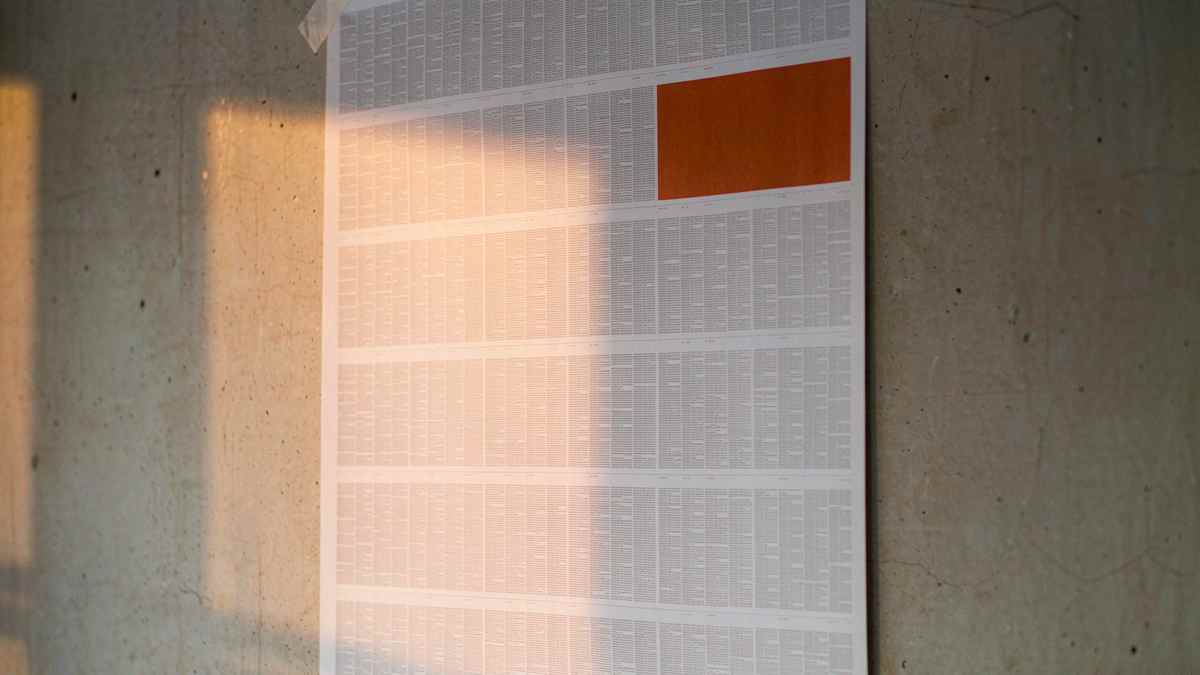
In mid-October, an open model called MOSS-Image started circulating in a few Chinese developer groups, and the reason it circulated was plain: it writes Chinese text on a poster correctly.
That sounds like praising an adult for using chopsticks. But if you have ever built a poster, an infographic, or an e-commerce product page, you know how hard it is. For two years the workflow has been fixed. Ask the model for an image, open an editor, paint over the mangled characters, and retype them by hand. The model draws. The human writes. Clean division of labour.
MOSS-Image is aimed at that division. It comes from the OpenMOSS team, which includes researchers at Fudan University's NLP group and Shanghai Innovation Institute, among others. It has 5 billion parameters, a single-stream DiT architecture, was pre-trained from scratch, and ships under Apache-2.0.
What it actually gets right
Of the published evaluations, the one worth reading is long text rendering. The test set is 120 tasks each in Chinese and English, with an average target text length of about 1,339.8 characters, scored on a metric called Mean-6. It reports 96.3, which the team says is a new high among open-weights models. "Long text" here does not mean a four-character headline. It means a full paragraph, with line breaks and paragraph structure preserved.
The second piece is layout. The model accepts a structured JSON layout: you split the canvas into a summary and a list of items, and each item carries a type, a description, the text it should contain, and a bounding box. The model places things according to those boxes. On that task, detection box mIoU is 0.8786 and overall layout mIoU is 0.6788. In plain terms, elements land roughly where you asked, but the overall composition is not yet as precise as a design tool.
The third piece is prompt length. It accepts prompts up to about 4,000 tokens. That number matters to anyone who writes poster briefs, because a decent infographic brief is long: how the main headline should feel, what the subtitle hierarchy is, which exact colours go in the palette, what icon sits in the lower left. Those used to be compressed into one sentence. Now they can be written out.
Easy to install, unwilling to edit
Running it is ordinary. Clone the repository, create a virtual environment, install the requirements, then use Gradio or write Python directly.
After the environment is up and dependencies are installed, pip install -e '.[ui]' followed by python gradio_app.py --model OpenMOSS-Team/MOSS-Image-Base gives you an interface. From Python you load it through Diffusers with a custom_pipeline. Sampling defaults are Flow-matching Euler, 50 steps, CFG 3, shift 5, with negative-branch layer skipping at layer 22. If VRAM is tight, a Sequential mode trades speed for memory.
The real limitation is here: it is a pure text-to-image model. It cannot take a reference image, and it has no native editing. You cannot "change the headline on this poster." You can only generate a new one. The prompt enhancer is a separate module that relies on an external language model; the model itself does not do that job.
That is not a small defect. People who produce marketing assets spend about eighty percent of their time editing rather than generating. The client wants the logo two millimetres larger. Legal wants a claim removed. Operations says the colour on this SKU is wrong. A model that can only generate from scratch locks those people into a reroll loop, and the second roll comes back with a different composition.
So in a real workflow it behaves like a starting-point generator: use it to get the layout and the text right in one pass, export, then finish in a design tool. That is more convenient than the old process. It is not the end of the process.
What the 96.3 was measured on
Worth being precise here, so the number does not carry you further than it should. 96.3 comes from one specific evaluation set, one specific metric, and text averaging 1,339 characters. What it demonstrates is that on layouts of that length and type, its text accuracy leads other open models. It does not demonstrate that any length of Chinese copy will come out correct.
The team also states the boundaries in the model card: the backbone is text-to-image only, it cannot accept reference images or perform native editing, and prompt enhancement depends on an external LLM. Stating limits that plainly is not common in open releases and is worth noting.
The community is already patching the gaps
Within two weeks of release, the ecosystem moved. DiffSynth-Studio added full fine-tuning and LoRA training for both the Base and SFT checkpoints. Someone built a DeBand LoRA aimed at the vertical colour banding in the SFT version, and documented the trade-off honestly: suppressing the bands also changes fine detail. Someone else released an 8-step DMD distillation with ComfyUI LoRA adapters.
Taken together, those three tell you the model is being treated as a base rather than a finished product. People training LoRAs and distilling it says more about its practical value than any launch-day star count.
As for Base versus SFT: in the official comparison, SFT produces clearer text grouping and tidier whiteboard layouts. For posters and infographics, start with SFT. If you intend to fine-tune, start from Base.
Who should try it now
If your work is batch-producing Chinese posters, course infographics, long-form social images, menus, or signage, and you have a local GPU, it is worth an afternoon. Those jobs share the same shape: fixed layout, heavy text, and a requirement that output be reproducible. That is exactly where this model is strong.
If your work is retouching, background replacement, or restyling existing photographs, skip it. It cannot do those things, or it does them less efficiently than what you already use.
Weights and documentation are on Hugging Face and ModelScope under Apache-2.0, so commercial use is not much of a concern. What needs thinking through in advance is VRAM and process: Sequential mode rescues a small card, and turns fast iteration into waiting for tea to steep.
Related articles
The Video Leaderboard's Number One Is a Talking Head
HeyGen Video leads at 64,000 weekly requests, ahead of Veo and Wan. Chinese labs hold about 54.8% of routed video traffic while Runway sits at 0.3%. What request volume measures.
VideoGen Promises Ten-Minute Videos From One Prompt. Nobody Benchmarked It.
Ten minutes is assembled from many shots, not rendered in one pass. The product is the planning harness, and the cost and quality claims are still waiting on third-party validation.
NVIDIA's OpenShell Enforces Agent Policy in the Kernel
Kernel level checks on every file, syscall and connection, plus formal verification of policy changes before they apply. The install is one line. The operational bill is the rest of the page.
FLUX 3 Max Renders 10 Seconds of Video in 11. The Benchmark Has an Asterisk.
Fal post-trained FLUX 3 for speed and got a 1139 Elo claim out of it. The vote count is preliminary, the confidence interval overlaps the leader, and the 75% discount runs three weeks.