
A 260M Image Model Beat a Rival 6.5x Its Size by Looping the Same Blocks
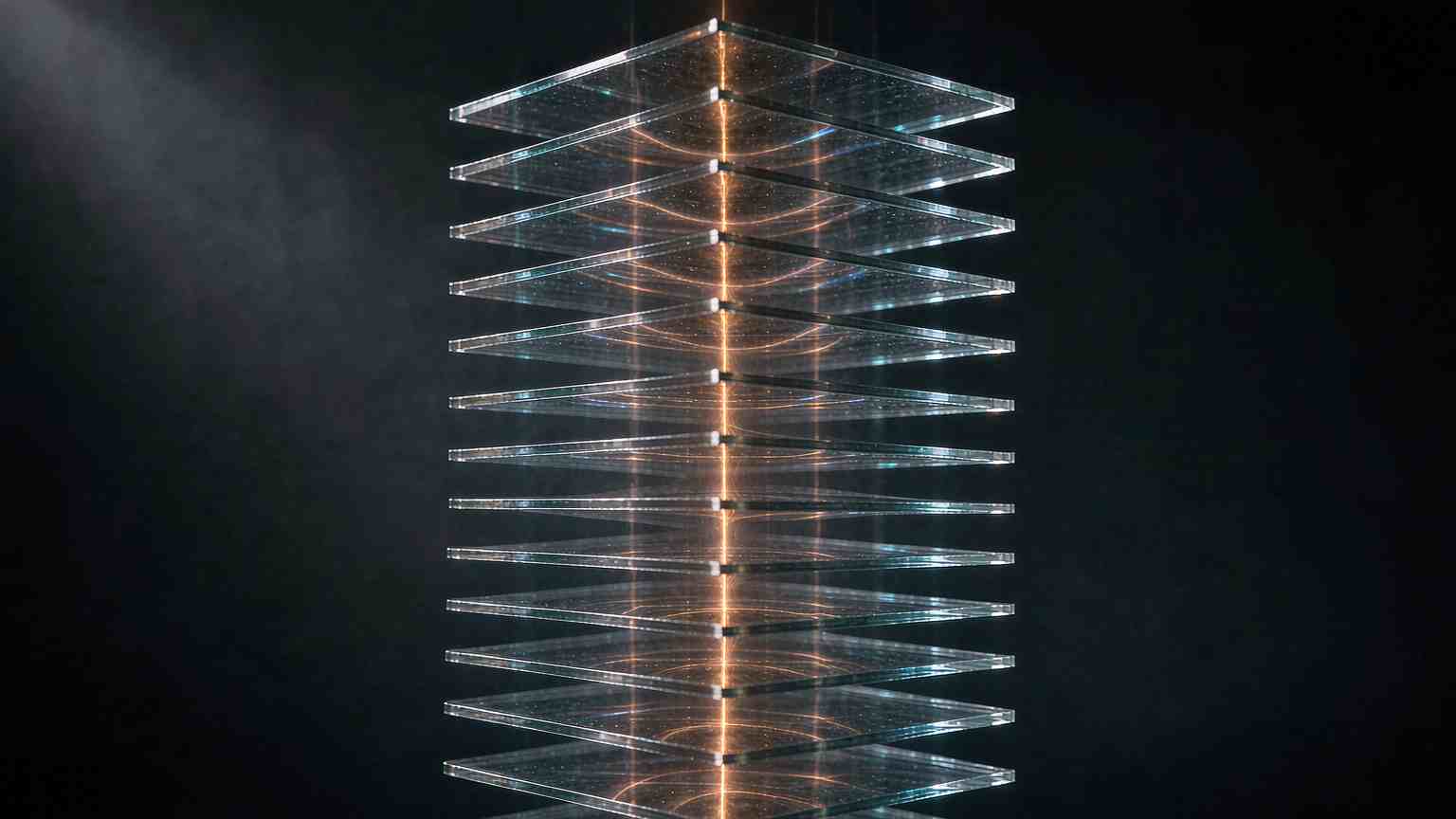
A new paper proposes a different way to scale text-to-image models, and the result is the kind of number that makes people look twice. By repeatedly running a set of shared Transformer blocks within each denoising step, instead of adding new parameters, a 260-million-parameter model reportedly beat a rival 6.5 times larger while using about 4.9 times less compute. The technique is called the Looped Diffusion Transformer, and the idea behind it is old enough to be familiar from elsewhere in machine learning.
The principle is weight sharing across depth. A standard image model gets stronger by stacking more blocks, and every block carries its own parameters. A looped model runs a smaller set of blocks over and over inside a single denoising step, so the same weights do more work before the image is finalized. Compute goes up with the number of loops, but the parameter count stays flat, which changes the math for anyone thinking about where the model will run.
Why it matters where parameters live
Parameter count and compute are usually discussed together, but they constrain different things. Parameters determine how much memory the model occupies and, often, whether it fits on the hardware a person actually owns. Compute determines how long a generation takes and what it costs to serve.
A design that trades a loop count for parameters aims at the first constraint without ignoring the second. The reported 4.9-times compute saving suggests the trade is favorable on this benchmark, though results in a paper are not the same as results in a shipped checkpoint, and the training stability of looped architectures has been a recurring concern in earlier work.
The open-image race is about footprint now
The timing is relevant because the open image community has spent the past year competing on a different axis. Memory footprint became a stated goal, with models advertised for how little VRAM they need and distillation techniques that cut the number of sampling steps. Approaches that reduce steps and approaches that reduce parameters attack the problem from two ends of the same pipeline. The Looped Diffusion Transformer sits at the parameter end.
A related result from Stanford NLP moves in a comparable direction. A method called UniEvo-VL uses on-policy self-distillation, in which a single model acts as both teacher and student, to lift the GenEval score of a Qwen-based image model from 0.747 to 0.808 without an external teacher model. The through-line is the same: get more capability out of a given model rather than training a bigger one.
That is more than a research taste. The top of the open-weight text-to-image leaderboard is a tight cluster at a modest size. Qwen-Image-2.1 leads at roughly 1,036 Elo with a 7-billion-parameter generation component, ahead of FLUX.2 dev and HunyuanImage 3.0 Instruct. The best open model still trails OpenAI's GPT Image 2.5 Sunburst, which sits near 1,197, by a wide margin. If the frontier is out of reach on size, efficiency tricks become the way smaller labs stay in the conversation.
The honest caveats
First, the headline comparison is a single benchmark. A 6.5-times-larger rival losing to a looped model on one evaluation does not mean the technique wins everywhere, and image quality is notoriously sensitive to prompt and sampler choices. Second, self-reported wins in this field have a habit of shrinking under independent testing, especially when inference is not run on identical hardware and settings. Third, looping trades training simplicity for inference efficiency, and the failure modes when the loop count is set wrong are not obvious from a launch summary.
None of that undoes the direction. The interesting question for a working creator is not whether a 260M model beats a 6.5x rival in a table. It is whether the design shows up in downloadable checkpoints that run on a consumer GPU without four hours of setup. That has been the pattern with efficiency techniques: they start as papers, get absorbed into community finetunes, and within a couple of months become an expectation rather than a feature.
What to watch
Keep an eye on whether looped or weight-shared designs appear in released weights rather than only in papers, and whether the compute savings survive at higher resolution, where attention cost dominates. Watch the leaderboards after the next round of open releases, since a technique that lowers the parameter floor tends to show up as several new models landing in the same efficiency band at once.
The broader lesson from this batch of research is that the scaling conversation in image generation has matured. Adding parameters still works. But the more active work is about making a given model do more with less, and that is the kind of progress that reaches a laptop sooner than a data center does.
Why looping is an old idea with new traction
Weight sharing across depth is not new. It shows up in recurrent networks from years ago and in several language models that reuse a block of layers rather than stacking unique ones. What makes it interesting for diffusion now is the structure of the generation process. Producing an image happens over many denoising steps, and each step already runs the whole network. Looping within a step adds a second axis of repetition, which means the compute multiplier and the quality gain can be tuned somewhat independently.
The trade-offs are real. Reusing weights makes training harder, because gradients from every loop have to flow back through the same parameters, and a model that loops too aggressively can lose fine detail. The reported result uses a specific loop count that a paper can afford to tune; a shipped checkpoint has to work across prompts from a wide range of users, which is a stricter test.
There is also a practical reason the community will care more than the benchmark suggests. Nearly every open image model in circulation is judged partly on how little VRAM it needs, because the people running them are using one or two consumer GPUs, not a cluster. A design that lowers the parameter floor without a proportional hit to quality speaks directly to that audience, and that audience is now large enough to shape which techniques get adopted.
The efficiency arms race has two fronts
It helps to separate the two levers that get bundled together as "efficiency." Step distillation, which cuts the number of denoising passes, mainly reduces generation time and cost per image. Parameter reduction, which is what a looped design targets, mainly reduces memory and the size of the download. A model can be fast and large, or slow and small, and the best fit depends on the machine.
The last year of open image releases has pushed hard on the first lever, with four-step and two-step variants becoming the norm for anything meant to run interactively. The second lever has moved more slowly, which is why a result about parameter efficiency stands out. If it holds up, expect to see it combined with a distilled sampler, producing models that are both small enough to fit and fast enough to use, which is roughly where the on-device image generation story has been heading for a while.
None of that is guaranteed by one paper. But the direction is clear, and the payoff is tangible for anyone who has waited on a queue to generate a single image.
Related articles
The AI Video Price War: Luma Cut Seedance Rates by Up to 73%, and Runway Started Selling Rivals
The engines are close enough now that the invoice is a better guide than the leaderboard.
Two Voice Models Just Reset the Bar: 50ms to First Audio, and a 99M Model on a Laptop CPU
Quality converged, and the competition moved to where the model runs, how fast it starts, and what it costs per call.
Moonshot's Kimi K2.6 Runs a Thousand Agents at Once and Built a Compiler in Ten Hours
A thousand agents that each need supervision multiply the supervision, not the capacity.
Oracle Put Agent Orchestration Inside the ERP, and That Changes the Governance Math
Agent capability stopped being the headline. The headline is whether a company can prove, after the fact, exactly what its agent did.