
Higgsfield Pushes AI Video Past Ten Minutes, and Length Was Never the Hard Part

Ten minutes is not a bigger number, it is a different problem
On October 14, OpenAI described how Higgsfield, a video creation startup, pushed its AI-generated videos from about one minute to more than ten by building on GPT-6 Astra. The headline reads like a duration record. The engineering reality is closer to a change of genre.
A one-minute clip can be carried by a single good generation. Past that mark, length stops being about the model's imagination and starts being about its discipline. A ten-minute video has to keep a face consistent across a hundred shots, keep a room's geography stable when the camera turns around, and keep a jacket the same color in minute nine as it was in minute one. None of that is creative work. All of it is the kind of bookkeeping that used to require a human in an editing bay.
Higgsfield says Astra's ability to let creative agents call external tools, including 3D modeling, is what holds character, scene, and detail consistency across a long piece. That is the interesting claim, and the point has less to do with video than with a model that can reach outside itself when a single forward pass is not enough.
What actually breaks when a clip gets long
Short clips are forgiving. Generative systems can hide a great deal in four seconds of motion, because the eye never gets enough time to check the details against each other.
Long clips are unforgiving in a specific way. Each shot becomes a promise that the next shot has to keep. If the lighting shifts between scenes that are supposed to be continuous, the viewer feels it immediately, even if they cannot name what is wrong. If a character's hairline drifts, the illusion collapses on the second appearance, not the first.
This is why the conversation around AI video has moved from resolution to continuity. Resolution is a number you can put on a spec sheet. Continuity is a property of a system, and it tends to come from planning rather than from sampling. You need something that remembers what was decided two minutes ago and enforces it, which is exactly the shape of problem that memory and tool use were built for.
The 3D detour that makes the point
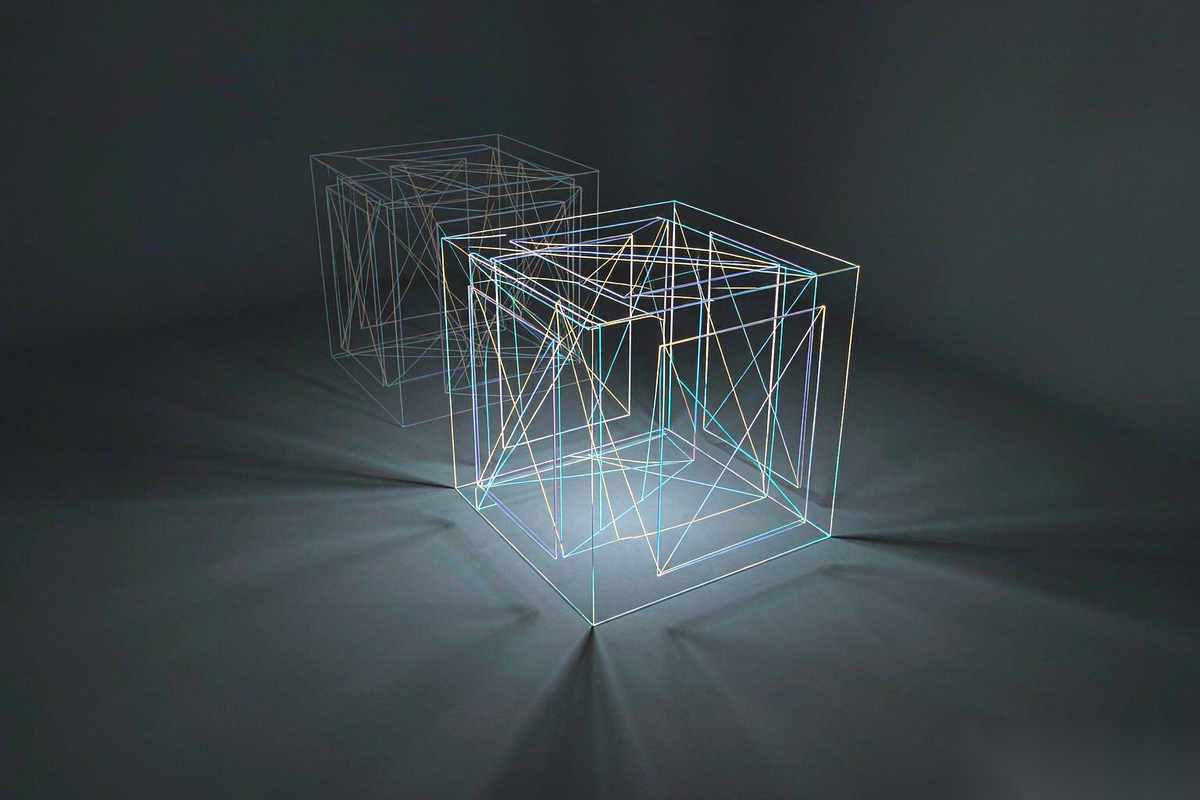
It is worth sitting with the detail that Astra can drive external 3D modeling tools. A pure image or video model works in two dimensions and hopes the geometry is implied. A system that can build and consult an actual 3D scene has somewhere to put the truth.
If the room is a real object with real walls and real furniture positions, then every camera angle is a projection of the same underlying thing, and the consistency problem becomes a rendering problem rather than a guess. That is a meaningful shift. It also explains why the ceiling here is set by orchestration, not by the generator. The model has to know when it needs a tool, pick the right one, and carry the result forward. That is an agent loop wearing a film crew's clothes.
A channel that runs on this
The most concrete proof that this is not a demo is that Higgsfield has been using the workflow on its own YouTube channel. The company says the channel, with close to half a million subscribers, produced tutorial videos longer than ten minutes with far less manual production work than before.
That detail matters more than a benchmark. A tutorial video is not abstract. It has a structure, a voice, screen content that has to match what is being said, and a running time measured in minutes rather than seconds. If that can be assembled largely by a model plus tooling, then the bottleneck has moved from generation to editorial judgment. Somebody still has to decide what the video is about and whether the result is good. Somebody just does not have to render every frame by hand.
Images, text, and the unglamorous work
The same announcement covers still images. Higgsfield integrated GPT-Image-2.5, and the company points to its ability to render readable text and infographics reliably, which sounds dull and is not. Text rendering has been the quiet embarrassment of image models for years, and it is precisely what small businesses need when they want a poster, a price card, or a one-page explainer without paying a designer.
The cost argument is straightforward. A promotional asset that used to require a freelancer, a round of feedback, and a day of waiting can now be produced in minutes. That does not make it better than a professional designer's work. It makes it available to people who were never going to hire one.
Building the tools with the tools
There is a second-order story here that is easy to miss. Higgsfield says it uses OpenAI's Codex to speed up its own product development, with around 200 creative staff and 100 engineers. Creatives can turn an idea into a working software prototype with less front-end and back-end support than before.
That is the compounding part. The company that makes video tools is using AI to build its own tools faster, and the people driving that process are the ones who understand the customer's problem, because they are the customer. When the distance between "I wish the tool did this" and "the tool does this" shrinks, product roadmaps stop being annual plans and start looking like a standing conversation.
Voice to video, and where the line sits
Higgsfield also flagged its next direction: voice-to-video, built on GPT-Live-1. The idea is that you describe what you want out loud, the system reads your intent, and it generates the video in real time.
If it works, it changes who can make video. The current stack still assumes someone fluent in prompts, timeline software, and revision. A spoken interface strips most of that away and leaves the intent, which is the only part a client ever really had.
The honest caveat is that "real time" and "ten minutes of consistent footage" pull in opposite directions. Instant generation wants speed and short horizons. Long-form consistency wants memory and patience. A system that does both well is not impossible, but it is a much harder target than either one alone, and the marketing will arrive well before the reliability does.
The metric that matters is not length
It is tempting to read ten minutes as a trophy. The more useful reading is that length is a proxy for the things that used to be unsolvable: continuity, consistency, and the ability to plan across a duration longer than a single attention span.
Those same properties are what make an agent useful for anything that takes more than one step. A video pipeline that can hold a scene together for ten minutes is, structurally, an agent that can hold a task together for ten minutes. The film industry gets the demo. Everyone building agents gets the lesson, and the lesson is that the hard part was never the output. It was remembering what you committed to and refusing to drift.
Related articles
Office Assistants Are Now Fighting Over Your History
Doubao Work's one-click import turns a user's history into luggage they can carry out. Office agents now compete less on model strength than on switching costs and memory.
The Oscars Draw a Line at Human Authorship, and Hollywood Keeps Arguing
AI performances and AI-written screenplays are out. The rule is not about tools, it is about credit, and credit is the one thing an institution can still decide.
Scan the Skill Before You Run It: Agent Skills Get Their First Security Checkpoint
A skill is not a setting. It is a bundle of instructions and scripts that an agent follows with whatever permissions it holds, and NVIDIA just shipped a scanner that knows 64 ways that goes wrong.
Scan the Skill Before You Run It: Agent Skills Get Their First Security Checkpoint
A skill is not a setting. It is a bundle of instructions and scripts that an agent follows with whatever permissions it holds, and NVIDIA just shipped a scanner that knows 64 ways that goes wrong.