
VideoGen Promises Ten-Minute Videos From One Prompt. Nobody Benchmarked It.
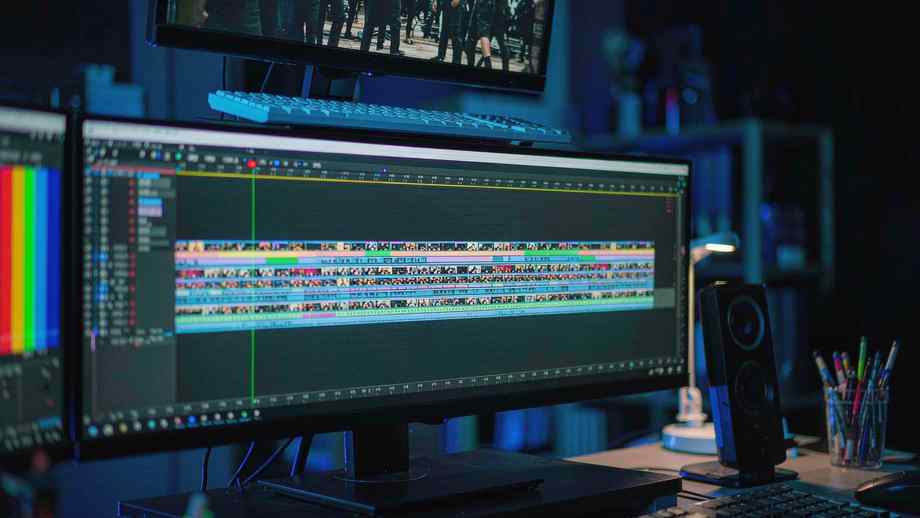
VideoGen announced Model 1 on October 20 with a claim that is either a category change or a marketing line, and the difference matters: one prompt becomes a finished, multi-shot video up to ten minutes long, with dialogue, sound, and music.
Ten minutes is roughly twenty times the longest single-pass generation from the current leaders. Kling 4.0, Seedance 2.5, and Wan 3.0 all advertise up to 30 seconds in one generation, with extension features that reach a couple of minutes at best. If you have been following this market, ten minutes reads as a different product.
It is, and it isn't. The press release is explicit that longer videos "are assembled from multiple generated shots." Model 1 does not render ten minutes in one pass. It plans a film, generates it shot by shot, checks the shots, and cuts them together. The model is one component in a pipeline that happens to be sold as a single product.
What the company actually shipped
VideoGen is a San Francisco company, Y Combinator Summer 2024, founded in 2023. Until now its product turned a prompt, script, or article into a video using other companies' models. Model 1 is its own.
The published capabilities: text-to-video and image-to-video, up to 16 images as visual references, a target duration and aspect ratio you can specify, and joint audio-video generation so dialogue, sound effects and music come out together. Access started October 20 as a private-partner rollout, with general availability promised after more safety testing. The company also opened applications for a $1 million pool of free credits, aimed at filmmakers, studios, students, and, notably, journalists covering the launch.
The honest framing of the pitch is that the hard part is not the video model. It is the planning. A ten minute video needs a screenplay, consistent characters across scenes, dialogue that does not repeat itself, and a shot list that adds up to the requested runtime. That is a language model problem, and VideoGen built a harness of language models to solve it.

Inside the writers' room
A third-party reading of VideoGen's technical whitepaper describes a pipeline with distinct roles. A planning layer proposes concepts, a critic scores them against a rubric for the category (film, marketing, social, explainer, music video, microdrama), the best two become timed screenplays, and a rewriter converts each scene into the structured prompt format the video model expects, with separate fields for shots, dialogue, soundscape, and background music.
That same analysis reports three separate model "readers" checking only the spoken lines and on-screen text, flagging confusing dialogue, and notes the whitepaper's own caveat that these are "automated proxies, not human participants." There is also ordinary code doing ordinary checks: do the scene durations add up, does every speaker have a voice description.
This is the part of the announcement that will decide whether the product works. A twenty or thirty second clip can survive a vague prompt. Ten minutes cannot. Errors compound, characters drift, and the fifth scene starts contradicting the first. A planning layer that catches those problems before rendering is worth more than a better renderer, because rendering is the expensive part.
It is also the part competitors can copy fastest. A multi-model planning harness is software, not a research breakthrough.
The numbers that are not yet numbers
VideoGen says it expects Model 1 to cost more than 50% less than comparable models, based on internal validation. It also says final pricing, official benchmarks, and third-party validation are underway. Both statements are in the same press release, and the second one should govern how you read the first.
The one measured figure the company does share is a rendering experiment: an eight-step adapter cut average clip render time by 58.2% against the same system's 28-step baseline. VideoGen is careful to call that an experimental configuration rather than a guaranteed speedup, which is the right caveat and also an admission that the number is not a product spec.
So the current state is: a capability claim with a demo reel, a cost claim with no price list, and a quality claim with no benchmark. The demo reel is the company's own selection, which makes it a best case rather than a test.
Why length is the wrong scoreboard
Here is the uncomfortable context. Chinese trade press reported this month that 98.7% of AI micro-dramas fail to recoup their costs within six months of release. ByteDance's micro-drama business was reported to be burning through tens of millions of yuan a day in tokens. The bottleneck in that market is not the ability to generate footage. It is distribution and scripts.
That does not make a ten minute model useless. It reframes what it is for. If the constraint is storytelling, a tool that plans a narrative arc and keeps characters consistent is aimed at the actual constraint. If the constraint is attention, ten minutes is a liability, because nobody watches ten minutes of anything without a reason.
The realistic use cases are the unglamorous ones. Pre-visualisation for a shoot, where a director needs to see the scene before paying for a crew. Explainer videos for products nobody will make a commercial for. Internal training content. A ten minute generated video that is 70% right and takes an afternoon is enormously valuable when the alternative is a two week edit.
For anything an audience chooses to watch, the length is not the selling point. The planning is.
How to evaluate it when you get access
Ask for the failure cases, not the reel. Specifically: what happens at minute seven, when the model has to remember a character's jacket from minute two. Whether the dialogue repeats a line it already used. Whether the audio stays in sync through an assembled cut, which is where pipelines that generate shots independently tend to break.
Then run the boring test: give it a brief with a specific product and a specific claim, and see whether the planner invents a fact. The whitepaper's rubric reportedly includes checks that reject invented claims for marketing and explainer categories, which suggests the company knows this is the failure mode that gets customers sued.
And check the watermarking. VideoGen says outputs carry invisible watermarks identifying their synthetic origin. In a year when provenance is becoming a procurement requirement, that is a feature, not a footnote, and it is worth confirming it survives your editing pipeline.
Ten minutes from one prompt is a real expansion of what a single person can attempt. It is not a replacement for a director, and the company's own release does not quite claim it is. The interesting question is what happens when the planning layer gets good enough that the limiting factor becomes whether you had anything to say.
Related articles
The Video Leaderboard's Number One Is a Talking Head
HeyGen Video leads at 64,000 weekly requests, ahead of Veo and Wan. Chinese labs hold about 54.8% of routed video traffic while Runway sits at 0.3%. What request volume measures.
VideoGen Promises Ten-Minute Videos From One Prompt. Nobody Benchmarked It.
Ten minutes is assembled from many shots, not rendered in one pass. The product is the planning harness, and the cost and quality claims are still waiting on third-party validation.
NVIDIA's OpenShell Enforces Agent Policy in the Kernel
Kernel level checks on every file, syscall and connection, plus formal verification of policy changes before they apply. The install is one line. The operational bill is the rest of the page.
FLUX 3 Max Renders 10 Seconds of Video in 11. The Benchmark Has an Asterisk.
Fal post-trained FLUX 3 for speed and got a 1139 Elo claim out of it. The vote count is preliminary, the confidence interval overlaps the leader, and the 75% discount runs three weeks.