
The Gap Between Arena Leaderboards and Real Image Output Is Getting Wider

--- title: The Gap Between Arena Leaderboards and Real Image Output Is Getting Wider meta_title: Image Model Rankings and Real Output Are Diverging meta_description: LMArena's Image Edit Arena passed 30 million votes across 57 models, but benchmark standing and real-world image quality keep pointing in different directions. ---
Image model evaluation is in an awkward phase. The infrastructure for ranking models has never been better, and the connection between rank and practical output has never been looser.
LMArena updated its Image Edit Arena this month with more than 30.8 million votes across 57 models. OpenAI's gpt-image-2.5-sunburst and gpt-image-2.5-flare hold the top two positions, both marked preliminary. Thirty million votes is a serious dataset by any standard, and the ranking it produces is probably the most honest signal available for general-purpose image editing.
It also does not tell you whether the top model will work on your project.
What arena rankings measure
LMArena's method is pairwise comparison: show two outputs side by side, ask which is better, aggregate across millions of votes. It works well for questions with a broadly shared answer. Is this image more realistic? Did the model do what the prompt asked? For general image editing, most people agree, and the aggregate is meaningful.
The method has known limits, and they matter more for images than for text.
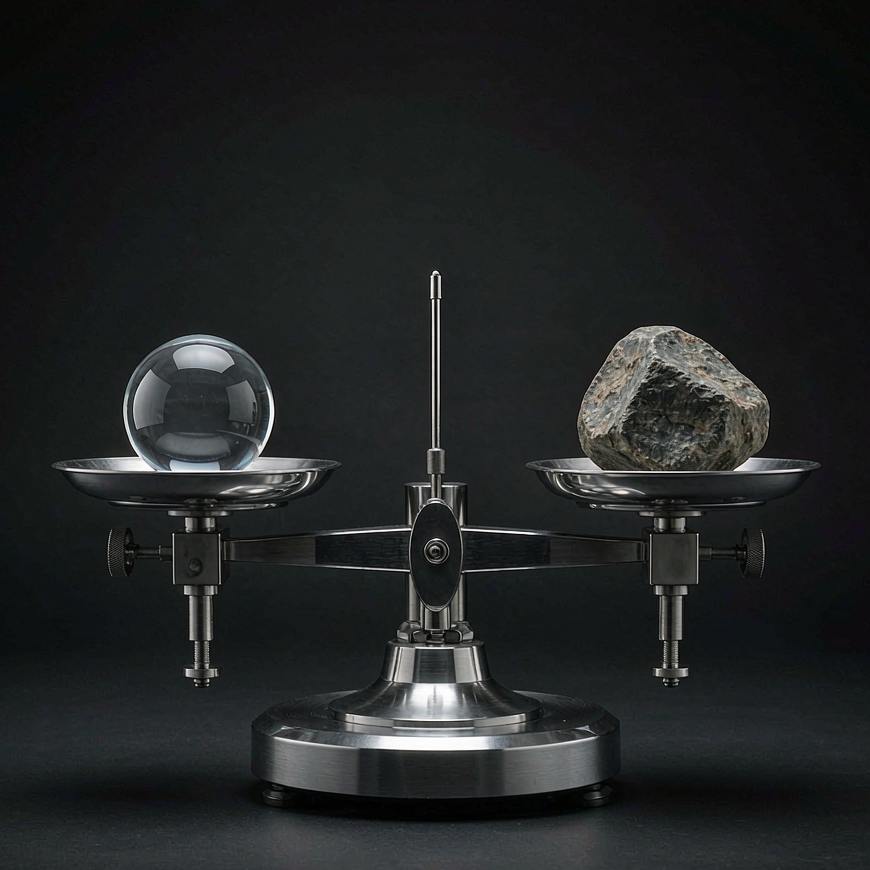
First, human preferences reward immediate visual appeal. An image that is striking in a side-by-side comparison tends to win, even if it has subtle defects that would surface under scrutiny. A slightly off hand, an inconsistent light source, a texture that falls apart at full resolution.
Second, editing tasks have task-specific requirements that a general ranking averages away. A model that is excellent at changing a background may be mediocre at changing a garment's fabric. A ranking blends those into a single number.
Third, the prompt distribution in an arena is whatever users type, which skews toward interesting and photogenic rather than representative of production work.
None of this makes the ranking wrong. It makes it a measure of general preference rather than of fitness for a specific job.
The Nano Banana case is instructive
The clearest recent example comes from Google's Nano Banana 2.1, released October 6 on the Gemini 3.6 Flash architecture at roughly half the output price of its predecessor.
Coverage of the release notes that the model outperforms the previous Pro model on some image generation benchmarks. It also notes that the predecessor scored well in tests and that the Pro model reportedly produced better images in real-world use.
So the newer model wins on paper and may lose in practice. The gap between those two facts is the central problem in image model evaluation, and it is not a small discrepancy. A buyer who reads the benchmarks and chooses accordingly could end up with the worse tool for their work.
The public ranking boards have a related issue. Artificial Analysis updated its open-weight text-to-image board this month and Qwen-Image 2.1 took the top spot with an Elo of 1036 based on 5,320 blind samples, taking first in 16 of 36 subcategories. That is a well-constructed result, and it establishes that a 7B open model can compete with far larger systems. What it does not establish is whether Qwen-Image 2.1 produces the images a specific brand needs.
Why the practical evaluations are harder
A really useful evaluation would measure a model against a fixed task corpus using criteria the buyer cares about, and the buyer would run it.
That is expensive, which is why almost nobody does it. Building a representative corpus takes time. Defining criteria forces a team to articulate what good means for its own work, which is harder than it sounds. Running enough trials to get a signal takes compute. And the answer expires, because the next model release resets it.
So teams fall back on two shortcuts. They read leaderboards, which measure the wrong thing but are free. Or they try a handful of prompts, which measures the right thing on a sample too small to trust. Both lead to the same place: a decision made on weak evidence, revisited whenever a new model ships.
There is a middle path that more teams could take, though it takes an afternoon to set up. Assemble thirty to fifty prompts drawn from actual past work, including the ones that caused trouble, plus a small scorecard covering instruction compliance, edit locality, and consistency. Run every candidate model against the same set at the same settings. The result is not a scientific benchmark, and it will produce a far more useful ranking than an arena leaderboard, because it measures the work rather than the average.
The reason this is uncommon is cultural rather than technical. Evaluation feels like overhead until a bad model choice costs a week of reshoots, at which point the afternoon spent building a test set looks cheap.
What the model releases suggest about the right criteria
Look at what the labs are emphasizing, and the shape of a better evaluation appears.
Google's Nano Banana 2.1 pitch is about visual design, mask editing, and subject consistency across up to 14 references. FLUX 3 Image from Black Forest Labs is about bounding-box layout control on a 0-1000 coordinate grid, native 4K output, and partial edits where 67.8% to 89.7% of pixels stay bit-identical. Alibaba's Qwen-Image-2.1-Pro emphasizes transparent layer generation, region-specific editing via mask, and identity preservation.
None of those are aesthetics claims. Every one is about controllability: can the model do exactly what was asked, and only that.
That is what production work needs, and it is what leaderboards measure poorly. A model that produces beautiful images but ignores a layout instruction is useless for a catalog. A model that changes one region and leaves the rest untouched is valuable precisely because the rest does not have to be checked.
So the evaluation criteria that matter are instruction compliance, edit locality, consistency across a set, and reproducibility. Those can be measured. They usually are not, because they require the evaluator to define a task first.
What to watch
Whether arena platforms add task-specific boards. Artificial Analysis is rebuilding its image-to-video board on a new scale, and every Elo moves when it does, which suggests the industry recognizes the need for finer-grained measurement. Image editing is the natural next area.
Whether vendors publish reproducibility details. A model that produces a good image one time in three at a given seed and settings is a different product from one that produces it consistently, and the number rarely appears in launch materials.
Whether buyers push back on benchmark marketing. The most useful thing a procurement team can do is refuse to accept a leaderboard position as evidence and ask for output on its own material. That is a small ask, and it is the one that actually predicts results.
Arena rankings are worth reading. They are just not worth deciding on. The 30 million votes tell you which model people prefer in a side-by-side. Your work is not a side-by-side, and the model that wins the comparison is not always the model that finishes the job.
Related articles
Google Flow and Adobe Firefly Move AI Video Out of the Chat Box
Base model quality has converged enough that the differentiator has moved to what surrounds the model.
Google Cut Nano Banana 2.1's Output Price in Half and Fixed Its Weakest Features
The most consequential detail sits outside the feature list, and it is the price.
Vida Wants To Bill for AI Agents by Results Rather Than Usage
Usage-based billing aligns the vendor's revenue with the agent taking longer. Outcome pricing inverts that.
Decagon's Voice 3 and PACT Prepare Customer Support for Agents on the Other End
Support systems spent decades modeling human behavior. Now some fraction of incoming requests are machines acting for people.