
The Fake Timelapse Is Not an AI Problem. It Is Fraud.
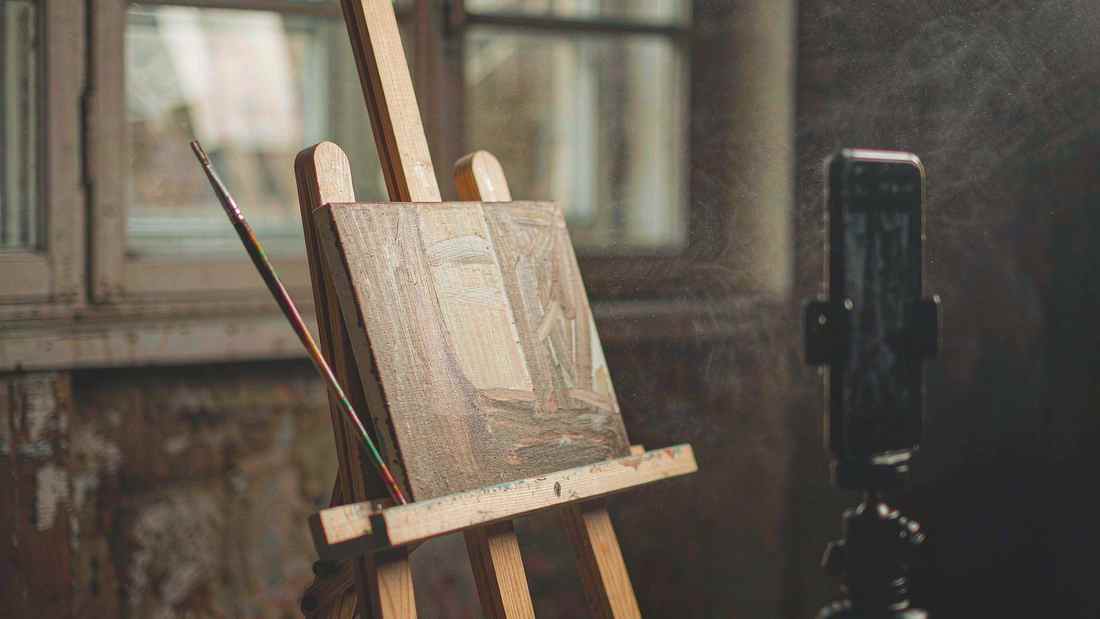
On October 19, someone posting as k_from_HyperDraw in the r/aiwars subreddit made an argument that is worth taking seriously precisely because it refuses to be interesting: faking an art timelapse is not an AI ethics problem. It is fraud.
The post described a practice that is apparently common enough to argue about. A creator stages a timelapse of themselves painting, or hires someone to film a timelapse, and presents an AI-generated image as the product of that handwork. The claim is about authorship, not about image quality. The image might be good. The story about how it was made is false.
The argument in the post is that treating this as an AI issue gives the wrong answer to a simple question. If you pay an actor to pretend to paint a picture you did not paint, the deception is the act. The tool used to make the picture is incidental. A painting-forgery scandal in 1985 had the same shape and no generative model anywhere near it.
The post also made a point that cuts against the usual framing from both sides: removing a watermark and refusing to credit a source are human accountability failures, and people who dislike generative models and people who like them should be able to agree on that without agreeing on anything else.
Why the process video became the evidence
Timelapses were never really about process. They are about proof. In a feed where anyone can post an image, the recorded sequence, the hand, the brush, the unhurried accumulation of detail, is the thing that says a person made this. It is an inefficient format that exists because efficiency is not the point.
That is also why it broke. A trust mechanism based on "this took forty hours and here is the footage" stops functioning the moment a convincing image can be produced in ninety seconds and a convincing timelapse can be staged. The mechanism did not get weaker. It became decoupled from what it was measuring.
What is left is a format that still signals "this is real" while providing no evidence at all, and an audience that has been trained for a decade to read the signal.
The part that is not a debate
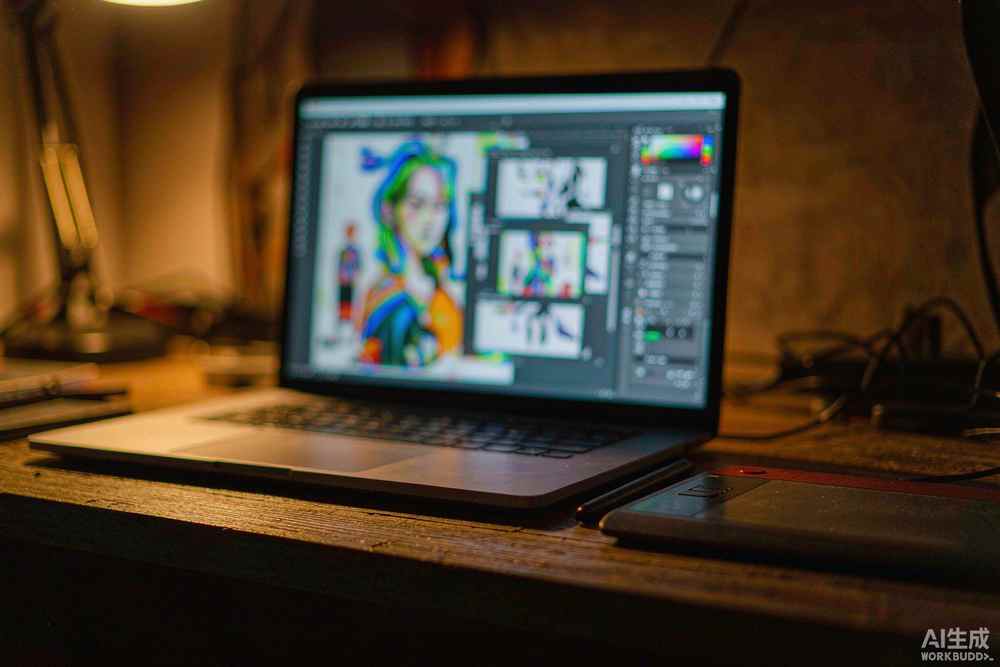
There is a version of this conversation that goes in circles about whether using generative tools is legitimate. That version is unresolvable and not especially useful. The version that matters is narrower: a buyer paying for a hand-painted commission and receiving a generated image has been defrauded, in the ordinary commercial sense, regardless of anyone's position on AI.
Commissions are the case where this has teeth. A gallery sale, a licensing deal, an illustration brief with a rate attached. In each of these, the price reflects an assumption about labour and authorship that the seller knows the buyer is making. Staging a video to sustain that assumption is not a style choice.
The damage is also unevenly distributed. Artists who do work by hand now have to prove it in a way they did not five years ago, and the proof is expensive: longer process footage, livestreams, screen recordings with timestamps. The cost of being believed went up for the honest and stayed at zero for the dishonest, which is the standard outcome when a trust signal is spoofable.
Disclosure solves most of this and costs nothing. A creator who says "generated, then hand-finished" is not competing dishonestly with one who says "painted over six weeks." The market can price those two things differently once it knows which is which. What breaks the market is the third case, where the label says six weeks and the file says otherwise.
What platforms are likely to do
The forecast that followed this discussion was that platforms would move toward metadata and provenance verification for art uploads, because distinguishing a real process from a staged one is becoming technically feasible and socially demanded.
That is directionally right and probably slower than it sounds. Provenance standards exist, and adoption is uneven because they require the tool to cooperate. A model run locally can emit anything or nothing. A platform cannot verify what it cannot see being made, and it can only check metadata that someone chose to attach.
What platforms can do cheaply is the opposite: stop rewarding the format. If timelapses are no longer a ranking signal, the incentive to fake one drops. That is a content policy change, not a technical one, and it is the kind of change platforms make quietly when the alternative is a verification system. It is also the only version of the fix that works at scale, because it removes the payoff instead of trying to police the evidence.
For the people actually affected
If you commission illustration, the practical defence is boring and it works: ask for the working file, not the video. A layered source file with a revision history is much harder to stage than a timelapse, and it is the artefact you would need anyway if you ever had to prove what you bought.
If you are an artist, the same advice applies in reverse. Keep the working files. Export incrementally. A folder of saved states with timestamps is a more durable record of authorship than any single video, and it takes no extra effort beyond not deleting things.
Contracts are the other place this gets solved cheaply. A commission agreement that states which model, if any, may be used, and requires the source file on delivery, removes the ambiguity before any work starts. Almost nobody writes that clause yet. The people who do will not have to argue about it later, and they will not have to film themselves painting to prove a point.
And if you are the audience, the useful adjustment is not cynicism. It is noticing that a forty minute painting video is now a claim rather than a demonstration, and that claims are worth exactly as much as the evidence attached to them. Most of the time that evidence will not be there. That is not a reason to assume fraud. It is a reason to stop treating the format as proof.
One Reddit post is not a trend, and it would be a mistake to write this up as a movement. What it is, is a clean statement of a distinction that a lot of the discourse keeps blurring. The technology is neutral in the way that a printing press is neutral. The person who films an actor pretending to paint, and sells the result as their own handwork, is doing something else entirely, and they would have been doing it in 1985 too.
Related articles
The Video Leaderboard's Number One Is a Talking Head
HeyGen Video leads at 64,000 weekly requests, ahead of Veo and Wan. Chinese labs hold about 54.8% of routed video traffic while Runway sits at 0.3%. What request volume measures.
VideoGen Promises Ten-Minute Videos From One Prompt. Nobody Benchmarked It.
Ten minutes is assembled from many shots, not rendered in one pass. The product is the planning harness, and the cost and quality claims are still waiting on third-party validation.
NVIDIA's OpenShell Enforces Agent Policy in the Kernel
Kernel level checks on every file, syscall and connection, plus formal verification of policy changes before they apply. The install is one line. The operational bill is the rest of the page.
FLUX 3 Max Renders 10 Seconds of Video in 11. The Benchmark Has an Asterisk.
Fal post-trained FLUX 3 for speed and got a 1139 Elo claim out of it. The vote count is preliminary, the confidence interval overlaps the leader, and the 75% discount runs three weeks.