
Running Image Models on Your Own Hardware in 2026: What the Local Community Is Actually Using
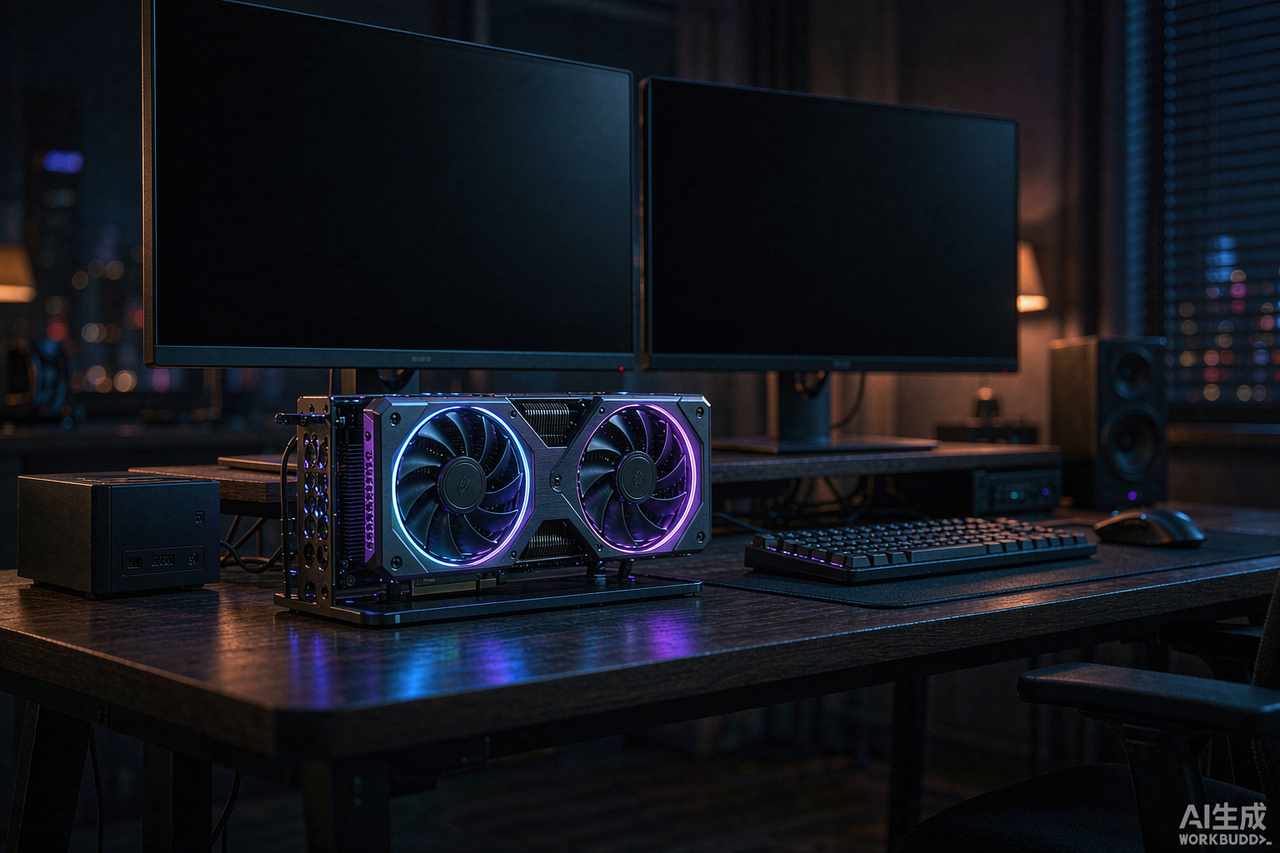
Ask r/StableDiffusion what to run locally this month and you will get a longer answer than you expect. The subreddit has always been the front line for local generation, but the last few weeks show a community in an unusually generous mood: new tooling, full university courses, ported runtimes, and a fresh wave of open models that fit on hardware most people already own.
Here is what the actual threads reveal.
The model stack has diversified
Z-Image Turbo keeps coming up as the entry point. A newcomer with an RTX 5070 Ti and 16 GB of VRAM asked this week what to move up to from it, which tells you it has become the assumed starting model for a fresh local setup. Fast, light, and forgiving on memory, it is the model people install first while they figure out what they actually want.
Qwen Image 2.1 is the new heavyweight that still fits on consumer machines. Community ports appeared almost immediately: a GGUF build in TensorSharp with editing and LoRA support, a native Apple Silicon runtime that produces a 512x512 image on an M1 Max in about 24 seconds, and a Fooocus-style Gradio front end with masks, outpainting, and pose references. A 192-image side-by-side against Krea 2, sorted by category, gave people something concrete to argue about. For text rendering and editing, it is pulling a lot of users away from older checkpoints.
Krea 2, Flux 2 Klein, and LTX-2.5 fill out the lineup. One EasyAI release post listed all of them as first-class options in a beginner desktop GUI, which is a good index of what people actually load.
The tooling gap is closing
The tooling gap has been the persistent complaint about local generation, and specifically about ComfyUI's node graph. Two projects attacked it from different angles this month. EasyAI is a PySide6 desktop app that sits in front of ComfyUI and reduces the experience to a prompt box and a button, aimed at people who bounce off custom nodes. The Fooocus-style Qwen studio takes the opposite approach: keep the complexity, but expose it as a single-page studio with sensible defaults. Between them, the two cover the audience split that has always defined this community, the people who want the graph hidden and the people who want it organized.
There is even a niche curiosity worth mentioning. An engineer got image generation running on an RP2350 microcontroller, which generates postage-stamp-sized images on a two-dollar chip. Nobody is switching to it for production work, but it says something about how far these models have compressed that a community celebrates a microcontroller port the way it used to celebrate new checkpoints.
Learning resources got serious
A free, fourteen-lecture university course on generative AI posted its second lecture this month: building a ComfyUI workflow from scratch with Z-Image Turbo, covering dependency management, model files, and tracing each stage of a packaged workflow. The AI Horde, the crowdsourced free inference service that has run since 2022, shipped a new interface, new backend, and documentation, which quietly matters for anyone without a GPU who still wants to try things.
What the hardware math looks like
The Reddit hardware threads give a real-world floor. The often-cited entry question this week came from someone with an RTX 5070 Ti and 16 GB of VRAM asking what to run beyond Z-Image Turbo, and the replies mapped the space without drama: nearly the whole current open catalog fits in 16 GB if you accept quantization on the heavy parts. At the other end, a 5090 owner ran the full BF16 denoiser of Qwen Image 2.1 unquantized, needing a quantized text encoder only as a memory optimization. Apple Silicon closed the gap differently: 32 GB of unified memory running a native Qwen runtime at roughly 24 seconds per 512x512 image.
Older and humbler hardware is not locked out either. The EasyAI post and the AI Horde both exist for people whose machines cannot run the current models at all, and one long-standing subreddit thread from a laptop with an MX500-class GPU shows the low end still troubleshooting its way toward acceptable output with SD1.5 derivatives. The realistic message is that the floor has risen to "a gaming PC from the last three years" and the ceiling has stayed exactly where it was, which is the opposite of how most software trends run.
Picking a setup, practically
If you are building a local rig now, the community consensus sorts into three tiers. Low VRAM, 8 to 12 GB: Z-Image Turbo or quantized Qwen variants, with speed as the trade. Mid-range, 16 GB like that RTX 5070 Ti: most of the current open catalog runs fine, and the question becomes which editing features you need. High-end, 24 GB and up or Apple Silicon with 32 GB unified memory: full-precision Qwen Image 2.1 with editing, LoRAs, and multi-reference workflows.
Storage is the underrated constraint nobody warns you about. Model files for this generation run from a few gigabytes for the fast variants to twenty-plus for full precision, and the ComfyUI workflow pattern of keeping several models installed multiplies fast. The university course's second lecture spends a full segment on refreshing model files without restarting the server, which tells you the workflow friction is real enough to teach.
One honest caveat from the same threads: uncensored and unrestricted variants circulate widely, and a high-engagement release of one such model, Nanosaur 2, drew hundreds of upvotes and nearly a hundred comments in days. Local generation means local responsibility. Whatever you run, you own the output, including the legal exposure. The community's own etiquette reinforces this; undisclosed photorealism gets policed by other users more reliably than by any platform.
Why local keeps mattering
It would be easy to ask why any of this persists when hosted services are one click away. The month's events supply the answer three times. A standalone product people had integrated around, DALL·E, was retired at the end of August and folded into ChatGPT Images, migrating everyone on someone else's schedule. Free tiers on hosted tools fluctuate with billing decisions that users do not control. And the AI Horde demonstrated the third path, a volunteer-run crowdsourced inference network, old enough to have outlived several commercial pivots.
Local generation is the only option whose roadmap you own. The models run at the same speed next year as today, the weights do not change under a prompt, and the tooling improves in public. With a 7B model benchmarking near frontier systems and one-click front ends replacing node-graph archaeology, the question has shifted. It used to be "can my machine run this?" Now it is "which of these do I actually want?"
Related articles
Running AI Image Generation at Home: A Realistic Guide for 2026
Local AI image generation finally works on ordinary hardware. Here is the realistic 2026 guide: cards, models, tooling, and the costs nobody mentions.
Twenty New Image Models a Month, and My Prompts Still Work: The Case for Structure-First Prompting
Why structure-first prompts survive model churn, and what to keep versus drop in your prompt library.
Making an AI Comic Drama Solo: The Complete Workflow from Script to Finished Video
A five-step breakdown of scriptwriting, storyboarding, image generation, voiceover, and editing, with character consistency tips and pitfalls to avoid—making an AI comic drama solo.
Guizang PPT Skill: Make Stunning HTML Slide Decks Right Inside Claude Code
Guizang PPT Skill turns any article into a polished HTML deck—magazine or Swiss style, AI images, presenter tools, install via npx or git clone.