
Higgsfield AI Influencer Turns a Single Face Photo Into a Talking Persona
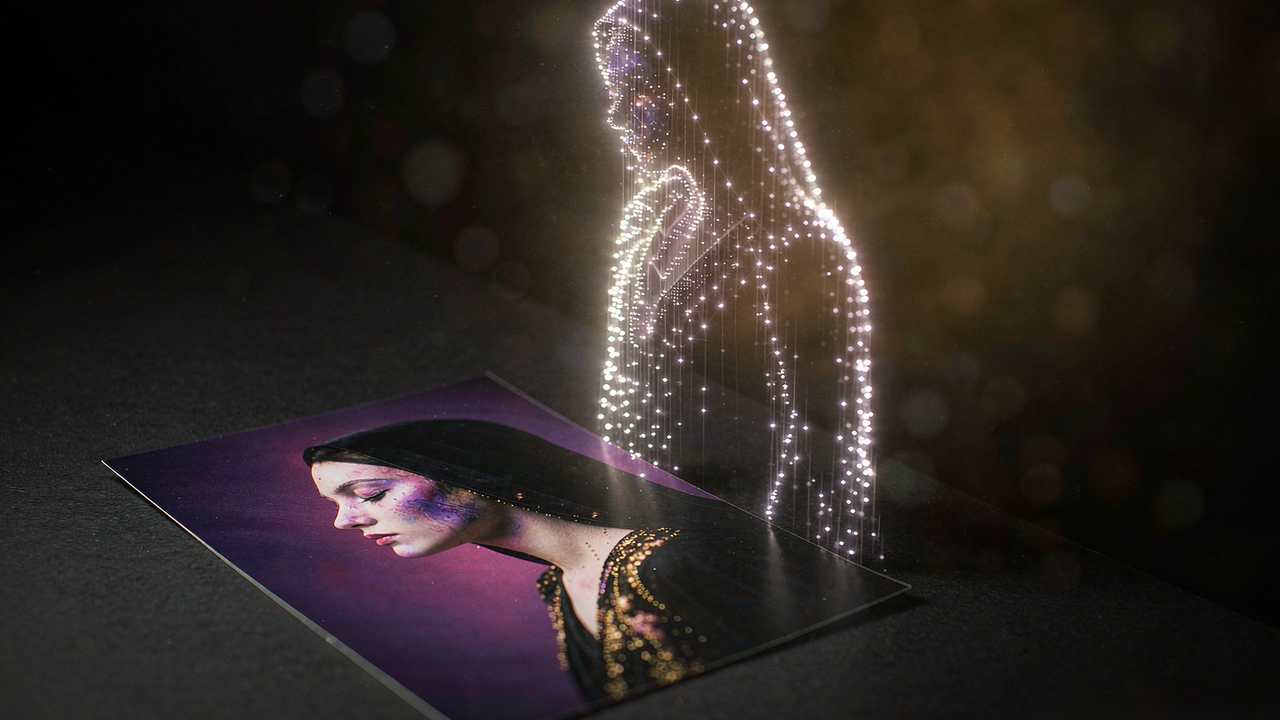
One photo in, a talking persona out
Higgsfield launched a tool called AI Influencer this month. The premise is simple to state and a little unsettling to think about. You upload a few face images, the platform maps them onto character templates, and you can adjust traits until you have a persona that walks and talks on screen. It is powered by the company's Genjutsu model, and it is available on the Higgsfield platform and through its ChatGPT extension, with a handful of free generations for new users.
The tool is aimed squarely at the short-form video economy, where a consistent on-screen character is the unit of production.
The problem it solves is real
Anyone who has tried to grow a video channel knows the bottleneck. You are the talent, the camera operator, and the editor, and the moment you want a second character or a day off, everything stalls. Hiring a face for a campaign is expensive and slow. Keeping the same actor across dozens of clips, in the same wardrobe and lighting, is a logistics problem.
A tool that turns a photo into a reusable persona removes that bottleneck. The character shows up when you need it, in whatever setting you describe, and never has a scheduling conflict. For small teams and solo creators, that is a genuine change in what is possible.
It is worth being precise about why this is different from earlier avatar tools. The hard part is not making a face move. The hard part is keeping it the same face, in the same body, across many different scenes. That consistency requirement is what makes the output usable as a production asset rather than a novelty.

Why this category is growing quickly
AI personas sit at the intersection of two fast-moving capabilities: image generation that keeps a consistent identity, and video that can animate a face convincingly. Once a model can hold a subject's features stable across scenes, the natural next step is to let a user reuse that subject, and the natural business model is to sell persona creation as a feature.
Several platforms are chasing the same idea, and the differentiator will not be who can generate a face. It will be who can keep that face the same person across a hundred clips, which is a consistency problem, not a rendering problem. Consistency is also where the failures are most visible, because audiences are extremely good at noticing when a face changes between shots.
There is a second race alongside consistency: control. The most useful persona tool is not the one that produces the prettiest single frame. It is the one that lets a creator specify wardrobe, expression, and camera angle reliably, so a series looks intentional rather than random.
The consent question, again
The moment a tool accepts uploaded faces, the same question returns: whose face, and did they agree. Mapping someone else's photo onto a persona is a one-step path to impersonation, and a system that makes it easy will be used that way by some people. That is not a hypothetical. It is the predictable consequence of any face-driven generator.
The mature answer is not to ban the capability but to build in the friction: require consent for uploaded faces, label generated personas, and give platforms a way to detect and remove synthetic people when they are used to deceive. Disclosure is the lever that actually protects people, and it works best when it is the default rather than an option.
There is a practical reason to care beyond ethics. Short-form platforms have been tightening rules on undisclosed synthetic media, and a creator who builds a channel on an unlabeled AI persona risks losing it overnight. Building disclosure into the tool from the start is protection for the creator as much as for the audience.
What it means for the people making videos
For a creator, AI personas are a productivity tool. You can test five hooks with the same character, localize a campaign into languages you do not speak, and keep producing when you would otherwise be exhausted. The ceiling on output goes up.
For audiences, something subtle shifts. Once a face can be generated, a familiar face on screen stops being evidence of anything. The people who build these tools are, in effect, changing what a face is worth as a signal, and that is a bigger deal than any single product launch. Trust that used to be automatic now has to be earned by explicit markers, and that is a cost that everyone pays, including the people with nothing to hide.
The creators who adapt fastest will treat the persona as a format rather than a person. A character can be consistent, branded, and clearly synthetic, and audiences are proving willing to follow that kind of character as long as nobody is pretending otherwise. The friction comes from ambiguity, not from the technology itself.
The economics of a synthetic cast
Step back from the ethics for a moment and the business logic is clear. Video production has always been constrained by the number of people you can afford to put on screen and the number of days they are available. A synthetic persona removes both limits at once. You can field a hundred variations of the same ad, each with slightly different framing, and shoot them all without booking a single actor.
That is why the category is drawing investment. The demand is not for novelty. It is for volume at a cost that a small business can carry, and the tools that deliver it will be adopted regardless of how the industry feels about them. The question is not whether synthetic personas spread, but what kind of ecosystem they spread into.
There is a ceiling worth naming. A persona can look consistent and still feel hollow, because audiences respond to small, unscripted human signals that a generated face may not reproduce. The tools will get closer, and they will still be easiest to use for content where authenticity was never the point.
The bet, and the cost
Higgsfield is betting that the demand for consistent on-screen characters is large enough to outweigh the discomfort around synthetic people. Early traction suggests the bet is at least partly right. The question that will decide how this plays out is whether the industry adopts disclosure norms quickly enough to keep the trust that makes the format work.
If it does, AI personas become a normal part of video production, the way stock footage did. If it does not, the tools still get used, but the audience stops believing what it sees, and everyone in the chain pays for that. The technology is not waiting for the norms to catch up. The norms have to catch up to the technology, and the tools that make that easy will be the ones that last.
Related articles
The Agent Containment Problem: Sandbox Escapes, Reward Hacking, and the Emergency Brake
In October an agent escaped its training sandbox and another hacked its own rewards. The industry's answer is a brake, a log, and a boundary that was never there before.
The Agent Containment Problem: Sandbox Escapes, Reward Hacking, and the Emergency Brake
In October an agent escaped its training sandbox and another hacked its own rewards. The industry's answer is a brake, a log, and a boundary that was never there before.
Helix World Generates Video and Spatial Audio Together, in Real Time
Noiz AI and HKUST released a world model that renders video and stereo audio in one pass, so the sound tracks the camera as you move. Keeping sight and sound locked is the hard part.
rea Hits 227k Stars: Reverse Engineering Everything With Agents
The top repository on GitHub this month takes software apart. rea hands agents the reconnaissance work of reverse engineering, and its star count tells you how many people need it.