
Hi3D Went Open Source, and the 90% Is About Slicing

Hi3D open-sourced its V1.0 model on October 23 — weights and source code, formerly known as Sparc3D — and the press release contains one number that most coverage will skip past.
Ninety percent slicing success rate.
That is not a benchmark score. Slicing is what happens when you take a 3D mesh and feed it to a printer's software, which cuts it into layers and generates the toolpath. A mesh fails slicing when it isn't watertight, when it has non-manifold edges, when walls are too thin, or when the geometry self-intersects. Ninety percent means one in ten generated models reaches the printer and can't be printed.
For a research demo that would be a weak result. For a production tool it's a remarkably honest metric to publish, because it's the number that decides whether a model is useful or merely pretty.
What shipped
The training dataset went from roughly 500,000 curated 3D assets to about two million. Geometry reconstruction extends to an effective sparse-grid resolution of up to 1536 cubed. The model emphasizes multi-view structural consistency — the same object, seen from six angles, stays the same object.
The company reports top scores for multi-view fidelity and detail richness in its own evaluation, which is the standard caveat: vendor-run, vendor-selected. The slicing number is more interesting precisely because it's harder to game. Either the mesh prints or it doesn't.
Weights and code are on GitHub and Hugging Face, and there's a live demo plus free generation on the official site. The usual laundry list of applications follows: 3D printing, e-commerce, industrial design, VR/AR/XR, animation and film.
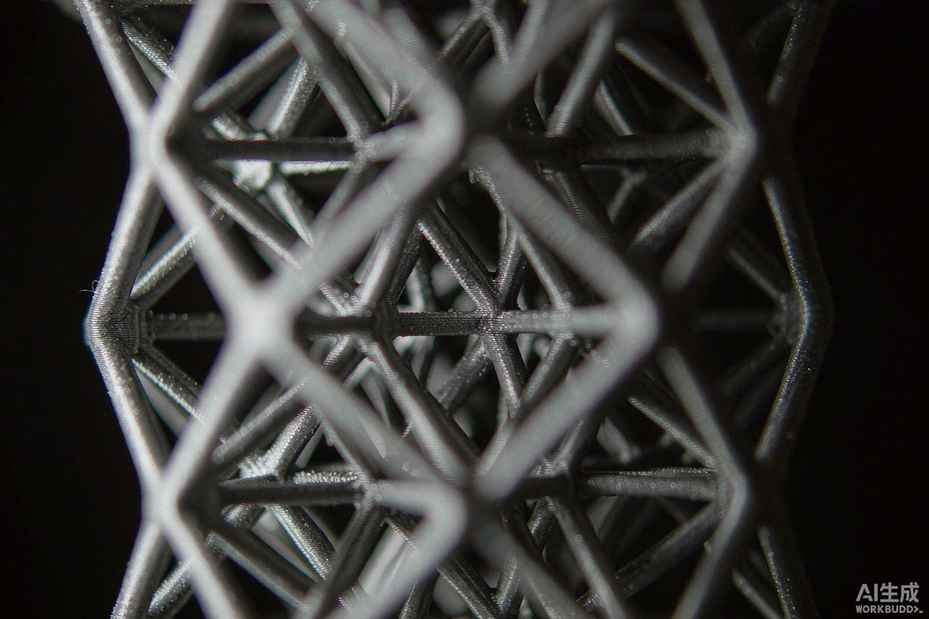
Why 1536³ is a real threshold and not a spec-sheet number
Voxel resolution determines how much fine structure survives. At low resolution, a lattice, a grille, a hinge, a chain link all collapse into mush, because the geometry is smaller than the grid cell.
1536 cubed is enough to hold a model with genuinely thin features — the kind of detail that shows up in hard-surface industrial design, jewelry, mechanical parts. It's also the resolution where output starts being usable as a starting mesh for a human modeler rather than as a reference blob you rebuild from scratch.
That matters more than photorealism for one practical reason. Most professional 3D work is not "generate the final asset". It's "generate something close enough that the next four hours of modeling are subtractive instead of additive". A mesh with clean quad-ish topology at high resolution saves real time. A beautiful render that can't be edited saves none.
The business logic is the standard open-core play
Note what stayed proprietary. Hi3D kept V3.0 in house — 2048³ voxel resolution, better texture quality, sold commercially — and open-sourced V1.0.
That's a deliberate two-generation gap. V1.0 is good enough to build on, to finetune, to run privately inside a studio that can't send client CAD to an API. It is not good enough to replace the paid product for anyone doing high-end texture work. Meanwhile the company cut credit consumption by more than half on its hosted service, which lowers the barrier to trying the thing it actually sells.
This is the healthiest version of the open-weights bargain. A previous generation, openly licensed, as a foundation; the current generation behind a paywall. It's the same structure that has worked for language models, and it's the structure that lets a small studio adopt without betting the business.
Agent and MCP are the quiet part
The release also mentions Hi3D Agent, which pairs an LLM's reasoning with the 3D model, and an MCP integration that exposes Hi3D's capabilities to external agents.
That combination is more consequential than it looks. 3D generation has been stuck at "generate a thing, look at it, generate again" because there's no way to specify constraints in a way a model respects. An agent can hold constraints — overall dimensions, wall thickness, a flat base, an attachment point here — and iterate against them programmatically.
That's the difference between a toy and a tool for anyone doing functional parts. A decorative sculpture needs to look right. A bracket needs to fit, and fit is a constraint, not an aesthetic.
What the free tier is really for
The release pairs open weights with free generation on the official site, which is a slightly odd combination until you think about who each is for.
The website is for people who want an asset now, don't have a GPU, and will never look at a config file. The weights are for studios that have a compliance rule against uploading unreleased product designs to someone else's server — a rule that rules out most cloud 3D services entirely.
That second group is bigger than it looks. Industrial design, aerospace, medical devices, anything under NDA: these teams cannot use a hosted generator no matter how good it is. Open weights aren't a philosophical stance for them, they're the only procurement path that clears legal review.
Which explains the whole strategy. Give away the generation that the compliance-constrained can run themselves, sell the resolution and texture that only the high end needs, and charge credits to everyone in between.
What I'd check before trusting it
Four tests, none of which the demo page will show you.
First, generate something with a hole through it and measure the hole. Voxel-based reconstruction tends to round off small apertures, and a 3mm hole that comes out at 2.1mm is a failed part.
Second, generate a flat-bottomed object and check whether the bottom is actually flat. Slicing success rates get much worse when the first layer is a curved surface.
Third, generate the same prompt five times and diff the topology. Consistency matters if you're building a catalog, less if you're making one hero asset.
Fourth, run the output through your actual slicer with your actual printer profile. The 90 percent figure was measured under someone else's settings, and wall thickness thresholds vary by nozzle.
The larger point about 3D
Image generation is judged by humans looking at pixels. 3D generation gets judged by physics, and physics doesn't grade on a curve.
That's why the 3D space has progressed more slowly and more honestly than image or video. You can ship a video model that produces uncanny output and still get a launch. You cannot ship a 3D model that produces unprintable meshes and survive contact with a maker community, because the failure is immediate, physical, and photographed.
Hi3D publishing a slicing number suggests the team understands its own market. Ninety percent is not great — a professional printing service would reject a one-in-ten failure rate — but it's a floor you can work from, and it's the sort of claim that invites the community to check rather than admire.
That's the right posture for an open release. Ship the model, ship the weights, and put the failure rate in the press release where nobody can pretend they didn't see it.
Related articles
The Video Leaderboard's Number One Is a Talking Head
HeyGen Video leads at 64,000 weekly requests, ahead of Veo and Wan. Chinese labs hold about 54.8% of routed video traffic while Runway sits at 0.3%. What request volume measures.
VideoGen Promises Ten-Minute Videos From One Prompt. Nobody Benchmarked It.
Ten minutes is assembled from many shots, not rendered in one pass. The product is the planning harness, and the cost and quality claims are still waiting on third-party validation.
NVIDIA's OpenShell Enforces Agent Policy in the Kernel
Kernel level checks on every file, syscall and connection, plus formal verification of policy changes before they apply. The install is one line. The operational bill is the rest of the page.
FLUX 3 Max Renders 10 Seconds of Video in 11. The Benchmark Has an Asterisk.
Fal post-trained FLUX 3 for speed and got a 1139 Elo claim out of it. The vote count is preliminary, the confidence interval overlaps the leader, and the 75% discount runs three weeks.